Blog/Guides
How to find buying signals for outbound
Learn how to use buyer signals, including new leaders, hiring, competitor engagement, and pain points, to prioritize timely outbound outreach.
By OmniReach··Updated ·7 min read
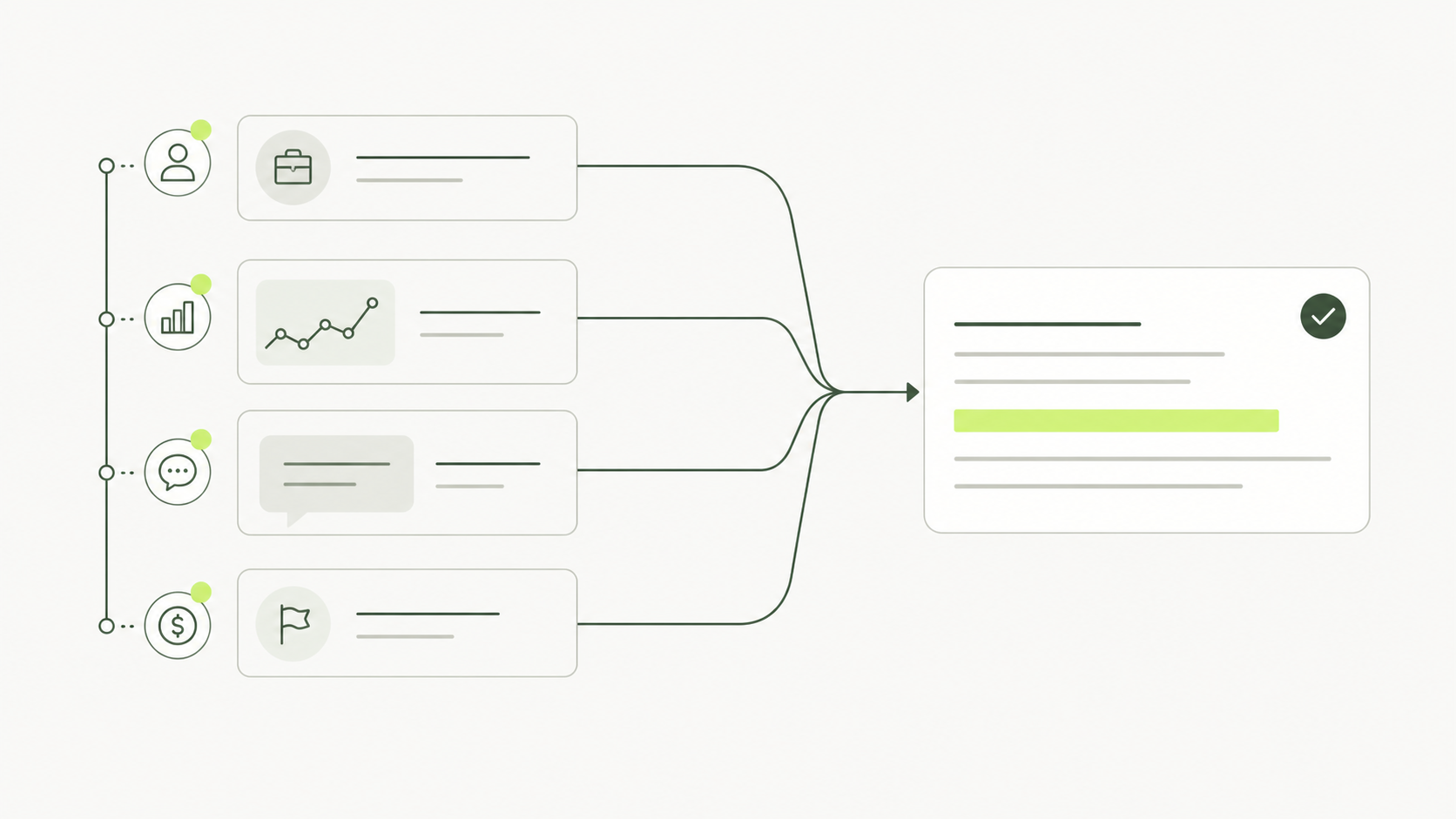
Most outbound fails before the first sentence is written. The copy isn't the problem; the timing is. The message arrives months before or after the moment the prospect actually cared.
Signal-based outbound flips the order. Instead of starting with a list and hoping, you start with events. A new leader, a hiring surge, a public complaint about a competitor. You reach out to the people those events just made receptive.
This post covers which signals are worth tracking, how to prioritize them, and how we built this motion into OmniReach, where detected signals become reviewed, ready-to-send outreach instead of another dashboard you have to interpret.
Why cold outbound stopped working
The fix isn't better copy or a smarter subject line. The cold outbound model fails for structural reasons.
First, it optimizes the wrong scarce resource. Sending another message costs almost nothing. Getting a human to read one is the bottleneck. Cold outbound treats the first as the constraint and floods the second. That's why reply rates hover around 3 to 4% no matter how good the copy gets: you're interrupting people who don't currently have the problem you solve. Writing skill can't fix a timing problem.
Second, it answers the wrong question. A static list answers "who fits my ICP?" Buyers don't purchase on fit. They purchase on timing, fit plus a live reason. Fit without timing gets you the most polite no in sales: "not right now." A signal answers the question the list can't, which is why now.
Third, it loses the two-second test. The obstacle to cold outreach isn't getting opened. It's surviving the spam heuristic every professional runs without noticing: "is this a blast?" Generic first lines confirm it instantly and the message dies unread. A specific, recent, verifiable detail is the one thing a mass template can't fake, which is why signal-referencing outreach regularly reaches double-digit reply rates while generic sits near the floor.
Fourth, it doesn't learn. Run a cold list for 100 days and it's the same list. There's no feedback loop from outcomes back into targeting, only back into copy tweaks. A signal program compounds: you learn which signals actually convert for your product and ICP, drop the noisy ones, and the same effort produces better results every quarter.
There's also a quieter advantage: signal-based outreach caps your own volume. If you only message people with a live reason, you send fewer messages, which means better deliverability, healthier LinkedIn accounts, and acceptance rates that don't quietly rot. Cold outbound makes volume the lever and punishes you for pulling it. Signal-based outbound removes the temptation.
The tradeoff is worth stating plainly: signals shrink your top of funnel. You can't message everyone on a list when most of them have no live reason. That's the point. The math still works because each send converts several times better, and the conversations you do get are with people who have the problem this quarter.
The five signals that matter
Not every event is a buying signal. After looking at what actually converts, we group the useful ones into five playbooks:
- Competitor engagement. A prospect is publicly engaging with a competitor's content, comparing tools, or complaining about their current stack. This is the highest-intent signal there is. They have the problem, they're spending money on it, and they're not satisfied.
- Pain or initiative. A LinkedIn post, earnings mention, or company page that reveals a live problem: "our attribution is a mess," a digital transformation initiative, an expansion plan. The prospect is telling you what's on their roadmap.
- New leader. A decision-maker just joined your target role at a company in your ICP. New leaders spend their first 90 days or so evaluating vendors and proving themselves. Reach them while the window is open.
- Hiring momentum. A company hiring fast in a specific department is investing there, before any press release confirms it. Hiring a RevOps manager means CRM and sales-tech decisions are coming.
- Buyer intent. The account is actively researching your problem space, consuming content and visiting comparison pages. Noisier on its own, but powerful when stacked with one of the above.
Any one of these is a decent reason to reach out. Two or three together is a "prioritize this person today" moment. That stacking idea, signal density, is the biggest upgrade most teams can make.
From signal to sent message
Detecting signals is table stakes. The hard part is everything after: turning "this person posted about struggling with pipeline coverage nine days ago" into a message that references it naturally, without sounding like a robot read their profile.
The workflow that works:
- Detect. Watch your ICP continuously for the five signal types above. Manually refreshing LinkedIn doesn't scale, and a signal that's three weeks old isn't a signal anymore.
- Prioritize. Score by signal density and recency. One weak signal goes into a nurture queue. Three overlapping signals get same-day action.
- Draft with the evidence, not a template. The message has to connect the specific event to a specific outcome. "Congrats on the new role" is a template. "Saw you're building out the revenue team after the Series B; here's how similar teams handled X" is outreach. Prospect-specific drafts should start from the seller context and the evidence, not just a merge field.
- Review before anything sends. This is where most automation falls over. A message that references a signal and gets the fact wrong is worse than no message. Someone should eyeball the first touch.
- Stop on reply. The moment a prospect engages, automation should halt and hand the conversation to you. A reply-aware sequence keeps the follow-up path out of the way once the conversation starts.
Those last two steps are philosophy, not just features. Signals make personalization scalable, but they also raise the cost of a bad send. Referencing someone's post and then pitching them generically burns the exact trust you just built.
How we do it at OmniReach
We built our Signals feature around this motion, because we kept meeting founders who understood the theory but had no practical way to run it from one place.
Here's how it works in the product:
- Signal-based recommendations. We continuously pull people who match your ICP across the five playbooks above: competitor engagement, pain or initiative, new leaders, hiring momentum, and buyer intent. You don't manage a data pipeline. You open a queue of people who currently have a reason to hear from you.
- Evidence, not just names. Every recommendation ships with its "why now": the detected signal, a summary, pain points, mentioned competitors and technologies, and a link to the source. You can verify the signal in one click before you act on it, the same review-first principle we apply to sending.
- AI drafts grounded in the signal. Draft your first touch from the evidence, then edit. The draft references what actually happened, so you're editing a relevant message into a great one rather than rescuing a generic template.
- Straight into your sequence. Accept a recommendation and the person flows into your LinkedIn and email sequences, with review gates, visible daily caps, and automatic stop-on-reply. A good signal doesn't change the rules of safe sending.
The design intent is simple: the signal starts a conversation, it doesn't finish the work. We surface who's ready and why. You decide what to say and when it goes out. That's the difference between automating judgment and automating spam.
A practical way to start
If you're doing this manually today:
- Pick one high-value signal for your ICP. New leaders in your buying role is usually the fastest to validate.
- Build a small message framework for that one signal. Not a template, a structure: reference the event, connect it to an outcome, ask a small question.
- Run it against 20 to 30 people for two weeks alongside your normal outreach and compare reply rates.
- Only then expand to more signal types and more automation.
Signal-based outbound isn't about sending more. It's the discipline of only sending when you have something real to say, which is also how you keep your account safe and your replies human.
Next reads: connection request limits: how many is safe, connection message templates for founders, and the best LinkedIn automation tools in 2026, compared. See the feature in practice: Signals and how the review workflow works.
Try OmniReach
Review each campaign before launch
LinkedIn outreach for founders and small teams who want control, not volume.
Keep reading